Drywall Repair
Drywall Repair in North Ridgeville, OH | 10+ Years Experience
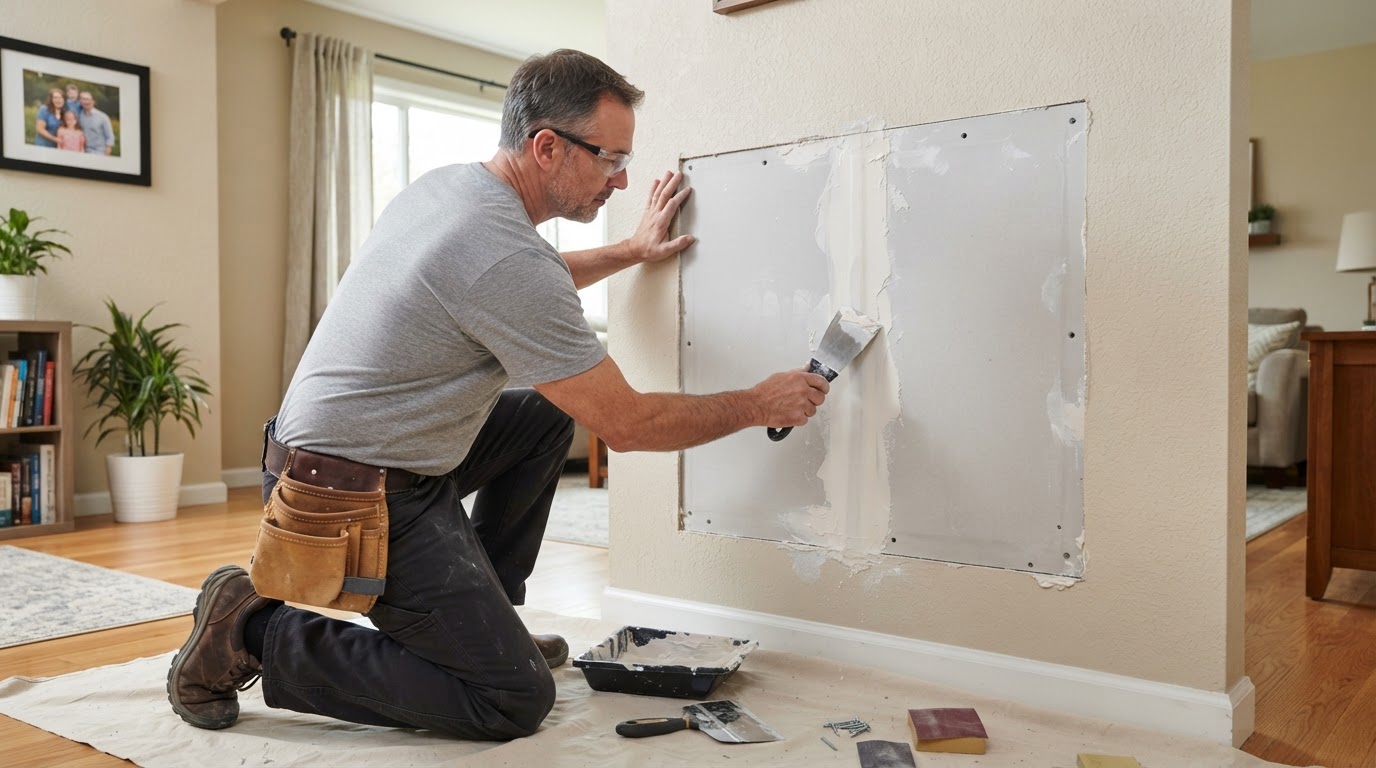
North Ridgeville Drywall Contractor provides drywall repair for holes, cracks, failed seams, nail pops, impact damage, damaged corners, and localized wall and ceiling sections across North Ridgeville, Ohio and nearby communities. With 10+ years of hands-on drywall experience and insured service, repairs range from a small mesh-and-compound patch to a cut-in replacement section of gypsum board with backing support.
Repair work uses joint compound, paper and mesh tape, setting-type compound, corner bead, drywall screws, and feathered coats to restore damaged board to a solid, paint-ready surface that blends with the surrounding finish — whether that is smooth, orange peel, or knockdown. Whether the damage is in a living room, bedroom, hallway, or garage, call 440-482-8191 or use the form to request an estimate.
- 10+ Years Experience
- Insured
Request a Drywall Estimate
- 10+ Years Experience
- Insured
- North Ridgeville & Nearby
Why Choose North Ridgeville Drywall Contractor for Drywall Repair in North Ridgeville?
Choosing a drywall repair contractor comes down to experience, accountability, finish quality, and clear communication. North Ridgeville Drywall Contractor brings practical repair and finish-matching familiarity to each project, along with straightforward pricing and process steps from the first call through final walkthrough.
10+ Years of Drywall Repair Experience
More than a decade of hands-on repair work — from small patches and seam repairs to cut-in replacement sections — means recognizing how different substrates, access conditions, and finish expectations affect the approach before work begins.
Insured Drywall Service
North Ridgeville Drywall Contractor is insured, giving property owners a layer of accountability when repair work is performed inside an occupied home, rental, or commercial space.
Repair and Finish Matching Expertise
Joint compound, paper and mesh tape, corner bead, setting-type compound, feathered coats, skim coating, texture matching, and dust-controlled sanding are applied with familiarity — not guesswork — so repairs blend with the surrounding surface.
Transparent Pricing and Scope
Planning ranges are provided up front with clear notes on what drives cost — damage size, number of locations, backing needs, compound stages, texture matching, and ceiling height — so you understand the estimate before committing.
Clear Repair Process
Every repair follows a defined path: assess the damage, determine patch vs replacement, protect the area, prepare stable edges and backing, install the patch, tape and compound, feather and sand, match texture, and complete a final review.
North Ridgeville-Area Service
A service-area contractor familiar with North Ridgeville and nearby communities, with phone and form access for easy estimates. Availability depends on project location, scope, and scheduling.
Our Specialized Drywall Repair Services
Each repair type below addresses a specific kind of damage. Every option follows the same three-part approach: what and where the work applies, how it is done with real materials and tools, and the outcome you can expect.
Hole and Impact Damage Repair
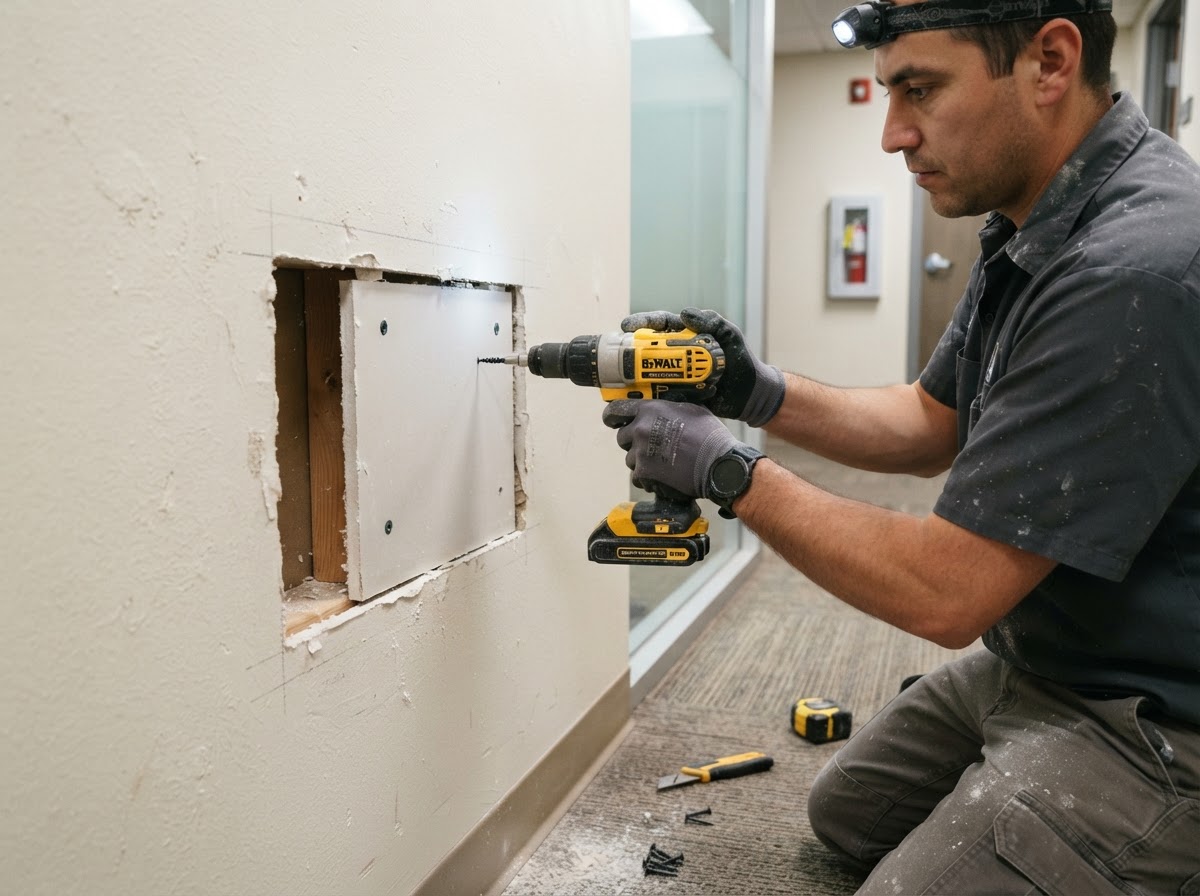
Hole and impact damage repair addresses openings from doorknobs, furniture movement, accidental impact, removed fixtures, and failed anchors in North Ridgeville homes and interiors. These are the most common repairs, ranging from a small puncture to a larger breach that exposes the wall cavity.
Depending on the size of the opening, a backing support or fitted patch insert of gypsum board is installed behind the gap, joint compound is applied in successive coats, paper or mesh tape is used to bridge the edges, and the finish is feathered out and sanded with dust-control practices.
The outcome is a stable, solid patch with a minimized visible transition, ready for paint so the repaired area disappears into the wall rather than reading as a distinct rectangle.
See drywall patch repair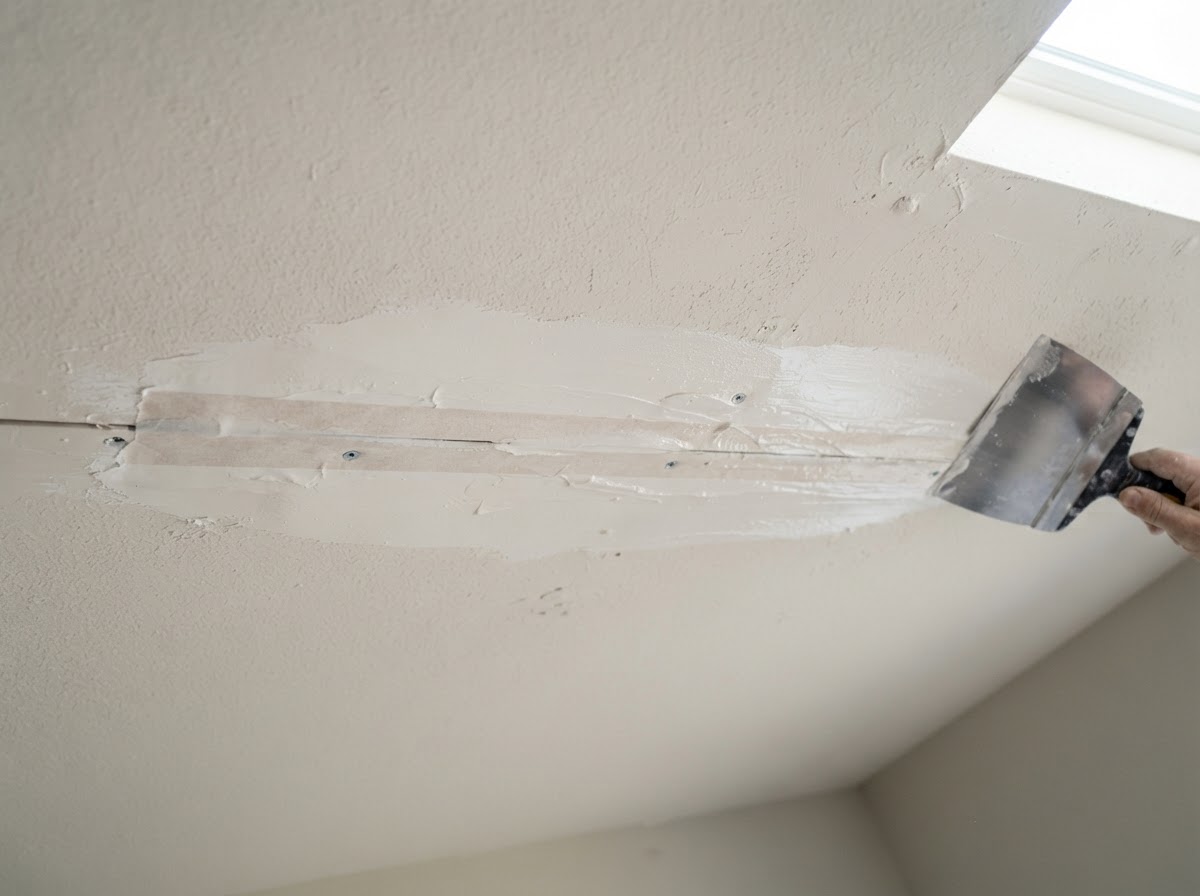
Crack and Seam Repair
Crack and seam repair addresses cracks along joints, corners, and ceiling lines, as well as failed tape seams where the joint treatment has lifted, bubbled, or separated from the wall. These issues are common in North Ridgeville properties as homes settle and move over time.
Loose tape is cut back, the joint is re-taped with paper or mesh tape, and joint compound is applied in successive feathered coats to rebuild a smooth surface. Setting-type compound may be used where faster drying is needed. If a crack is recurring, the underlying cause — such as movement or a failed joint — is assessed to determine whether a broader rebuild is needed.
The result is a smooth, stable joint that no longer telegraphs through the finish, with the repaired seam blended into the surrounding wall or ceiling so the crack does not return.
Learn more about Crack and Seam Repair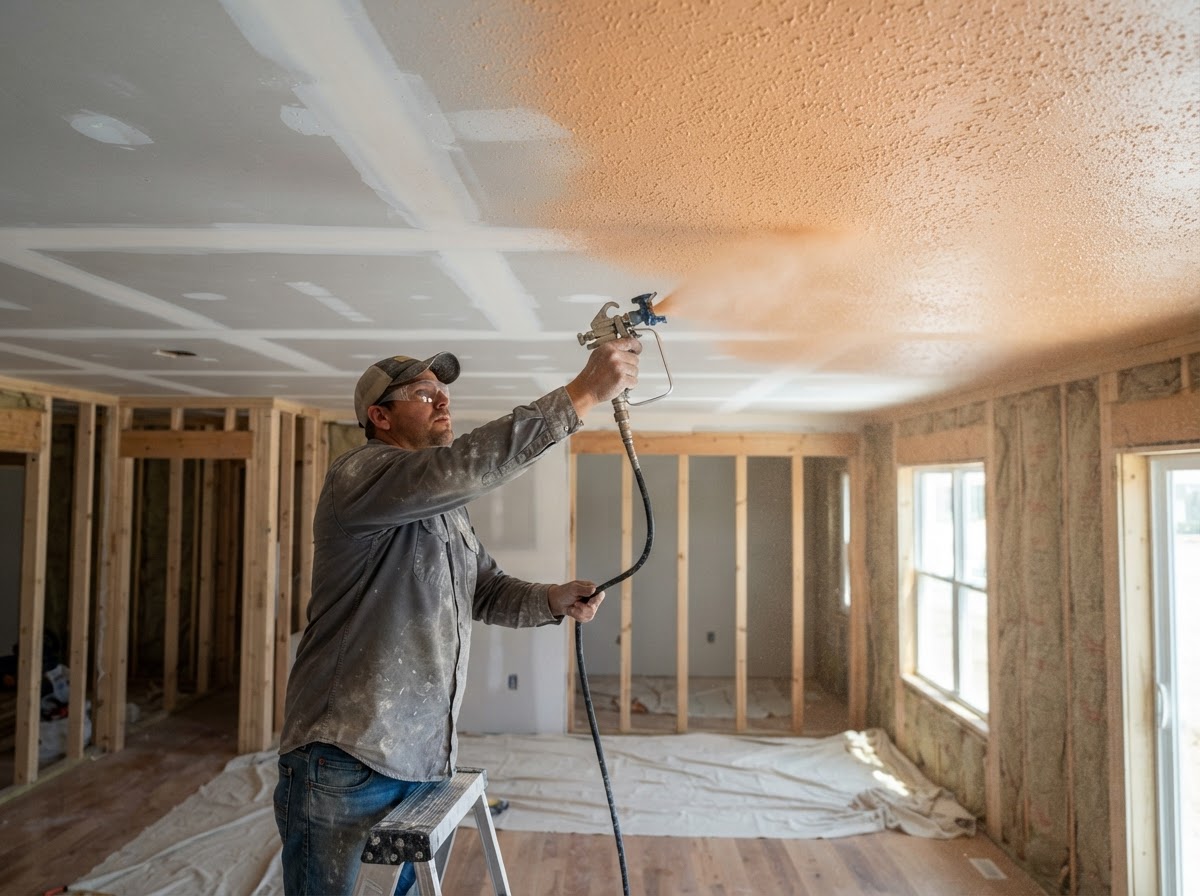
Nail Pop Repair
Nail pop repair addresses the small bumps or circles that appear on a wall surface where fasteners have shifted over time, pushing the compound ahead of them. Nail pops are common in older North Ridgeville homes and around seasonal framing movement.
The affected fastener is secured or replaced with a drywall screw set slightly below the surface, the popped area is patched with joint compound, and the spot is feathered and sanded to blend with the surrounding finish. Multiple nail pops across a wall can be addressed in a single visit.
The outcome is a smooth wall surface with the fastener movement corrected and the patched spots blended into the surrounding finish, ready for paint.
Learn more about Nail Pop Repair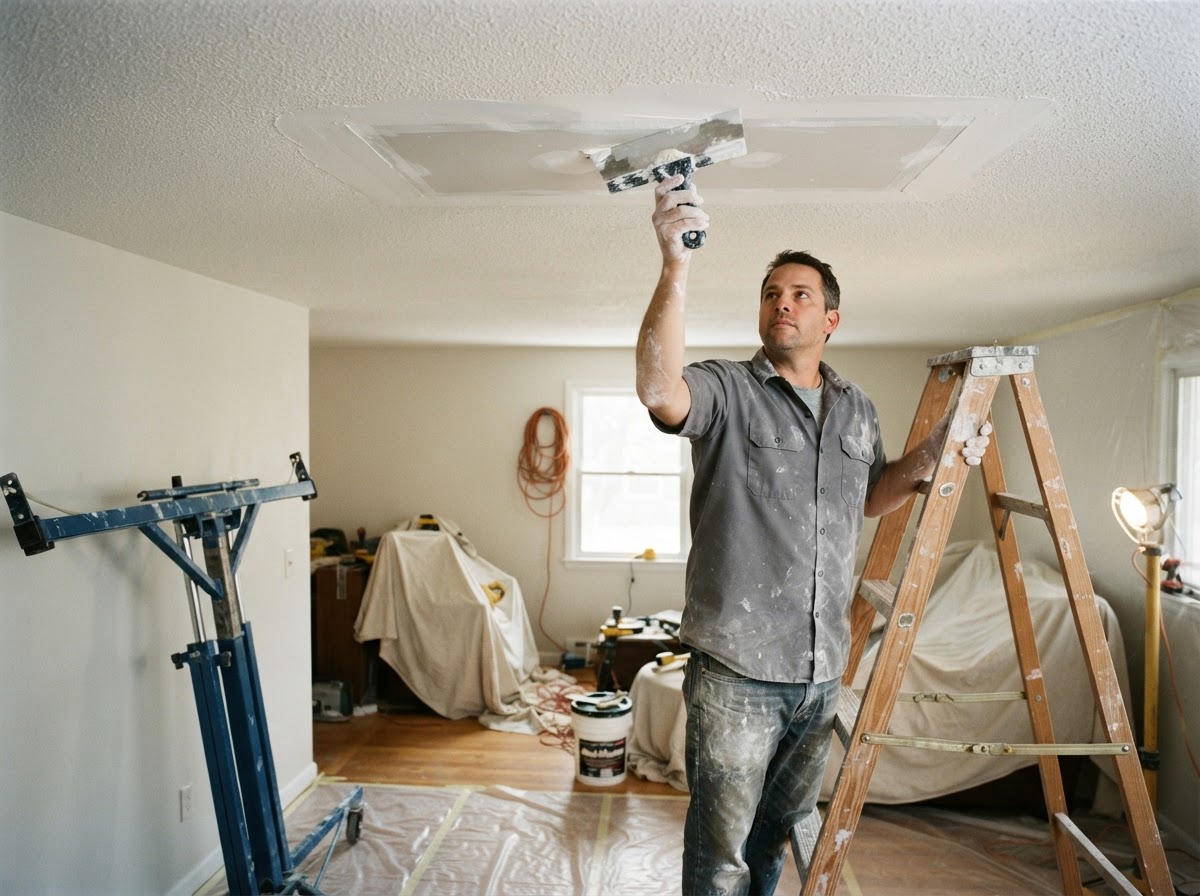
Corner and Edge Damage
Corner and edge damage repair addresses dented, cracked, or separated corner bead at outside corners, along with damaged inside corners where the joint treatment has chipped or cracked. These areas take more impact than flat wall surfaces in high-traffic North Ridgeville homes.
Damaged corner bead is straightened, secured, or replaced, and joint compound is applied in feathered coats to rebuild the corner profile. Inside corners are re-taped and finished with a corner knife or flexible knife to maintain a clean angle.
The result is a restored corner with a crisp, straight profile and a smooth finish that matches the surrounding wall, ready for paint and able to withstand everyday contact.
Learn more about Corner and Edge Damage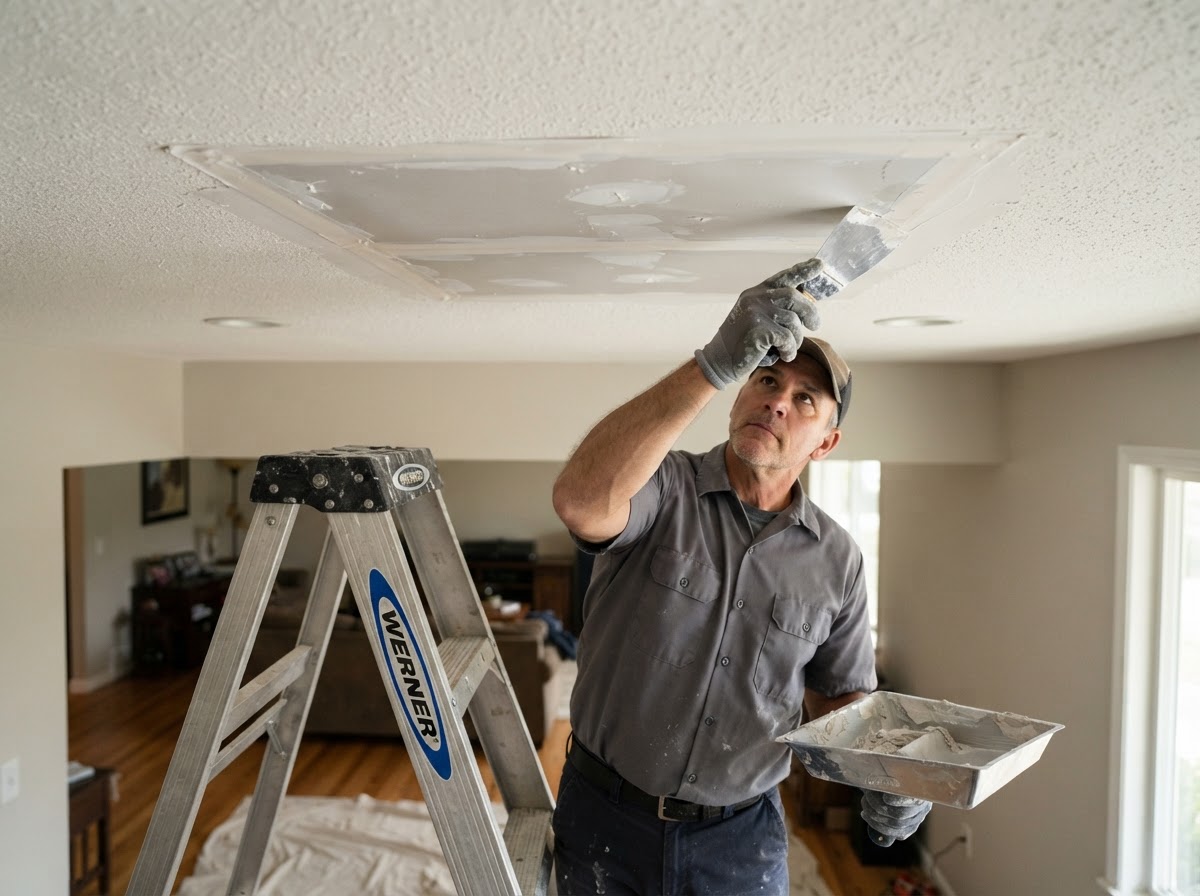
Larger Damaged Drywall Sections
Larger damaged drywall section repair is used when damage is too extensive for a localized patch — widespread deterioration, large openings, or moisture-damaged board that must be cut out and replaced. This applies to walls and ceilings across North Ridgeville properties.
The damaged board is cut back to solid material, a replacement section of gypsum board is measured and fitted, backing support is installed where needed, and the new panel is fastened with drywall screws. Joints are taped, compound is applied in successive coats, and the surface is feathered, sanded, and texture-matched.
The outcome is a restored wall or ceiling plane with sound drywall in place, the replacement section blended into the surrounding surface, and the area ready for paint or final finish.
See water-damaged drywall repairCommon Causes of Drywall Damage That Need Repair
Normal Building Movement
Homes in North Ridgeville settle and move with seasonal humidity and temperature changes, which can stress drywall joints and fasteners over time. This normal movement often shows up as hairline cracks along seams or nail pops where fasteners shift. A remote structural diagnosis is not possible, but on-site evaluation can determine whether the movement is typical or warrants broader attention.
Impact and Moving Damage
Impact from doorknobs, furniture, moving, children, or pets is a leading cause of holes and dents in drywall. These openings range from small punctures to larger breaches that expose the wall cavity. The good news is that most impact damage is localized and can be patched without replacing the full board.
Old or Failed Joint Treatment
Over time, the tape and joint compound that seal drywall seams can fail — tape lifts, bubbles, or separates from the wall, and cracks reappear along joint lines. This is common in older homes and areas with humidity swings. Repair involves cutting back the failed tape and rebuilding the joint with fresh compound.
Access Openings for Other Trades
Plumbers, electricians, and HVAC technicians sometimes cut access openings in drywall to reach pipes, wiring, or ducts behind the wall. Once the trade work is complete, those openings need to be patched with backing, compound, and tape to restore the surface.
Corrected Moisture Events
After a roof, plumbing, or HVAC leak has been fixed, the drywall it affected — stained, soft, or deteriorated board — often needs repair or replacement. The moisture source must be corrected first so the new material is not exposed to the same conditions. This repair does not include mold remediation or fixing the underlying leak unless separately verified.
Signs You Need Drywall Repair in North Ridgeville
Visible Hole
A visible hole in the wall or ceiling — whether from impact, a removed fixture, or an access opening — exposes the cavity behind the drywall and should be patched to restore the surface. Left open, the edges can chip and the surrounding board can weaken.
Recurring Seam Line
A crack or line that keeps reappearing along a seam, even after patching, suggests the joint treatment has failed or there is ongoing movement. Re-taping the joint with fresh compound addresses the root of the issue rather than just covering the surface.
Loose or Bubbled Tape
Tape that has lifted, bubbled, or separated from the wall has lost its bond with the joint compound. This creates a visible ridge or bubble that telegraphs through paint and should be cut back and re-taped before the damage spreads.
Broken Corner
A dented, cracked, or separated corner bead creates a visible defect at outside corners and leaves the edge vulnerable to further impact. Repairing the bead and rebuilding the corner profile restores both the appearance and the protection.
Soft or Deteriorated Board
Drywall that feels soft, crumbly, or stained — especially after a moisture event — has likely lost its structural integrity and may need to be cut out and replaced. The moisture source should be corrected before new board is installed.
Visible Surface Transition
A patch or repair from a past project that still shows through the paint — a visible rectangle, a texture mismatch, or a halo around the patched area — indicates the finish was not fully blended. Re-finishing the transition can make the repair disappear.
Our Drywall Repair Process
Assessment and Planning
The damaged area is evaluated to determine the extent of the damage, whether a patch or section replacement is appropriate, what finish surrounds the repair, and what access conditions apply. The cause of the damage is noted so the repair addresses the root, not just the surface.
Determine Patch vs Section Replacement
Based on the assessment, the approach is set — a localized patch with backing, a cut-in replacement section, or broader board removal. Isolated damage is often patchable, while widespread deterioration or moisture damage may require replacing more gypsum board.
Preparation and Protection
Floors, furniture, and adjacent surfaces are covered before work begins. Dust management practices and work-area isolation help keep the rest of the property clean. Unstable material is cut back to solid board, and backing support is installed behind larger openings.
Repair, Taping, and Finishing Work
A patch insert or replacement section is secured with drywall screws, corner bead is installed at outside corners, and paper or mesh tape is applied over joints. Joint compound is laid in successive feathered coats, with setting-type compound used where faster drying is needed.
Feathering, Sanding, and Texture Matching
The feathered coats are sanded smooth with dust-control practices, and the surrounding texture — orange peel, knockdown, or smooth — is matched to minimize the visible transition between the patched area and the existing surface.
Quality Control and Cleanup
The completed surface is reviewed under lighting, dust and debris are cleaned up, and the work area is returned to a usable condition. A final walkthrough gives you a chance to see the finished repair and raise any questions before the project is closed out.
How Much Does Drywall Repair Cost in North Ridgeville?
Drywall repair pricing in North Ridgeville varies mainly with damage size, the number of locations, backing needs, compound stages, texture matching, and ceiling height. The ranges below are typical planning ranges, not binding quotes.
Small localized drywall repair: about $150–$450
Notes: Size, backing needs, number of compound coats, texture matching, and minimum service scope affect price.
Multiple repairs or a larger wall repair: about $300–$900+
Notes: Extent of damaged board, number of separate locations, finish quality, and paint-ready expectations affect price.
Ceiling-related drywall repair: about $300–$1,200+
Notes: Overhead access, affected area, support and backing needs, texture matching, and ceiling height can increase labor. See the ceiling drywall repair page for detail.
These are typical planning ranges, not guaranteed local quotes. Actual estimates are confirmed after evaluating the project on site.
Ready to Schedule Your Drywall Repair?
Whether you have a single hole, a recurring crack, or multiple damaged areas, request an estimate and a drywall contractor will follow up to discuss scope, finish expectations, and scheduling. Call 440-482-8191 or submit the form.
Call 440-482-8191- 10+ Years Experience
- Insured
- North Ridgeville & Nearby
Request a Drywall Estimate
- 10+ Years Experience
- Insured
- North Ridgeville & Nearby
Frequently Asked Questions About Drywall Repair
How much does drywall repair cost in North Ridgeville?
Drywall repair in North Ridgeville typically ranges from about $150–$450 for a small localized repair, up to $300–$900 or more for multiple repairs or a larger wall repair. Ceiling-related repairs generally run $300–$1,200 or more. Size, number of locations, backing, compound stages, texture matching, and ceiling height all affect the final estimate.
Can a drywall hole be patched instead of replacing the whole wall?
Yes, most localized holes can be patched without replacing the entire wall, using backing support or a fitted patch insert, joint compound, and tape. Extensive damage, widespread deterioration, or moisture damage may require cutting in a replacement section of gypsum board, which is determined during the on-site assessment.
Why do drywall cracks come back?
Drywall cracks come back when the underlying cause — ongoing movement, a failed joint, or loose tape — has not been addressed. Simply patching the surface without re-taping the joint or securing the fasteners allows the crack to reappear. Cutting back the loose tape and rebuilding the joint with fresh compound addresses the root of the issue.
Can loose or bubbled drywall tape be repaired?
Yes, loose or bubbled drywall tape can be repaired by cutting back the failed tape, re-taping the joint with paper or mesh tape, and applying fresh joint compound in successive feathered coats. This rebuilds the bond between the tape and the wall so the joint no longer telegraphs through the finish.
Can nail pops be fixed?
Yes, nail pops can be fixed by securing or replacing the shifted fastener with a drywall screw set slightly below the surface, then patching the popped area with joint compound and feathering it to blend with the surrounding finish. Multiple nail pops across a wall can be addressed in a single visit.
Can repaired drywall be matched to the existing texture?
Repaired drywall can often be matched to the existing texture, but the exact appearance depends on the original texture application method, paint layers, age of the surface, prior repairs, and how light hits the wall. The goal is a close blend that minimizes the visible transition between the patched area and the surrounding surface.
How long does a typical drywall repair take?
A typical localized drywall repair requires multiple compound and dry-time stages, so a single patch may span more than one visit or day depending on the compound used and the finish level. Setting-type compound can speed drying, but standard joint compound typically needs overnight drying between coats, and larger repairs take longer.
Do you repair ceiling drywall too?
Yes, North Ridgeville Drywall Contractor repairs drywall ceilings, including cracks, holes, failed seams, and localized damage. Ceiling work involves overhead access and height considerations that are factored into the scope and estimate. See the ceiling drywall repair page for more detail.
Related Drywall Repair Services
Request Drywall Repair in North Ridgeville
The next step is simple: call 440-482-8191 or submit the form with your name, phone, email, project address, and the repair you need. A contractor will follow up to discuss scope, finish expectations, and scheduling for your North Ridgeville property.
Call 440-482-8191- 10+ Years Experience
- Insured
Request a Drywall Estimate
- 10+ Years Experience
- Insured
- North Ridgeville & Nearby